
Does Depression Disqualify Me from Becoming a
Missionary in the North?
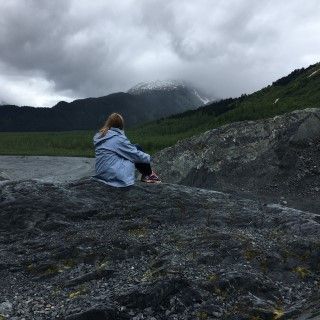

When pursuing missions as a 22-year-old, a big concern I had was my ongoing struggle with depression. Even though dark thoughts plagued me on and off since early high school, I never talked about them with anyone. I remember one summer day before my sophomore year of high school, looking out my bedroom window and feeling despair settle over me. 


Questions like Why am I here? Why am I even living? What’s the point? swirled in my mind, and I couldn’t answer apart from God who had put me there. Even though I trusted in God, I couldn’t shake the suicidal thoughts that came at times. 


This continued in Bible college. Sometimes, I would be fine. Other times, it was all I could do to get out of bed in the morning. Friends wouldn’t have guessed it by talking to me. I hid it well. My college boyfriend was the only person I started to open up to about it. He was aware of the dark moods and suicidal thoughts, and yet he still chose to pursue a relationship with me. We got engaged despite having no answers as to why depression was so prevalent in my life. I married this same wonderful man just before my senior year of college and, unfortunately, slid into a deeper depression after my first child was born a couple of years later.


My husband and I knew God was leading us into missions, so we started praying about and exploring different organizations to serve with.The more we heard about the conditions and needs in remote Alaska, the more our hearts broke for the many kids who had no one to share the gospel with them or show them how to follow Christ. This is because the church is sparse in most of western Alaska. Many villages didn’t (and still don’t) have access to a Bible-teaching church or youth group. Most don’t know any responsible adults who love Jesus to come alongside them. 


Imagine my surprise when God opened doors for us to minister in remote Alaska Isn’t it dark there in the winter? What about isolation? It sounded like a terrible idea to send a person there who struggles with depression. 


And it would have been a terrible idea if it hadn’t been for the strategic way SEND went about it. Instead of dumping us in a tiny village to figure out life and ministry on our own, our field leadership focused on building regional teams. This meant that you had teammates either in your village or another village nearby. Since my husband was a pilot, one of his focuses would be to keep our team connected.


When we arrived on the field, another missionary family who had lived there for several years took us under their wings.They helped us find a house in our village. They introduced us to people they had built relationships with, giving us “rookies” credibility. In the summer, they taught us to set a net for salmon fishing. They invited us to their kids’ birthday parties throughout the year and included us like family for holidays. Were things always perfect in our relationship? No. We had our fair share of conflict, as all teams do… but we attribute a lot of our ministry success and longevity to them. 


I learned how to cut it in Alaska in this greenhouse environment. With these things in place, did I still have depression? I did. If you’ve ever struggled with depression for some time, you know that it tends to follow you wherever you go. There were moments of finding myself on my knees, asking God if he was sure this was his plan for me.


However, over the fifteen years we have been in Alaska, God did a surprising thing: he provided healing for the root cause of my depression Although I lived in the middle of nowhere, he provided counseling and resources for me to become healthier emotionally. 


Who would have guessed that I would find healing in the dark expanse of a remote Alaskan village? It’s been a long process, but it has been beautiful to watch God do it. Maybe I wouldn’t have found this same opportunity for healing any other way. Only God knows the answer to that. I’m glad I came north. I’m so happy I didn’t let depression stop me. 


Does your story sound like mine? Do you wonder if you could serve in a remote place like Alaska even though you have depression at times? We have a wonderful new initiative called
Project Caribou that could be just the thing to help you if God is drawing you to serve in Alaska. 


Project Caribou is an initiative started by SEND North to support missionaries beginning their ministry in Alaska and northern Canada. The project involves setting up key hub villages that serve as central points where teams of missionaries can minister together in that community and the surrounding villages. This team-based approach is designed to smooth the transition into ministry and provide a support network for addressing the distinct challenges associated with ministering in northern areas. It’s about creating a collaborative environment that helps missionaries adapt and thrive in their new roles.


Learn more about Project Caribou

Watch a short video to explore this ministry

Additional Posts
By SEND media Team August 4, 2026
Choosing a Missions Organization: Why SEND International Stands Out “Why should I be a missionary through SEND International?” Jenna, a new missionary in Eastern Europe, shared with us what she appreciates about working with SEND. The highlights for her are: - Devotion to prayer - Diligence in communication - Commitment to development - Intentionality in accountability Prayer “Back in September of 2022, the Lord reconnected me with SEND after I had met them a year prior at the Moody Bible Institute. However, before he would sign me up for anything, my Missions Coach encouraged me to pray. He said something to the effect of, "I know that you've been praying on your own for a long time. But as the Church, we are not called to walk alone. So, you and I won't talk for about a month unless you have questions. I want you to go pray with 5 or 6 others from your church about where God is calling you." That October, more than 10 friends prayed with me and we saw God answer as He directed me to Romania. From February 2024 to November 2025, I had the pleasure of being a part of team meetings in Romania with my SEND colleagues. Our meetings were four hours long, two for prayer and two for business. This has been the minimum for our team. There are also prayer meetings with the local churches we partner with, among smaller groups within our team, of course prayer with many of you across the pond, including those at our US office. The organization was built, has been sustained, and continues to run on prayer. This is my favorite thing about SEND. Communication As I mentioned above, we have a two hour block for business / ministry details in each of our meetings. This provides consistency across our team which works alongside three different churches and in a variety of ministries. It also helps us to communicate about the need for change or growth, alongside what is working well. In addition, my team director also meets with each of us, allowing us to communicate needs, considerations, and prayer requests. I've also enjoyed getting to work with SEND workers outside of my immediate region . We receive emails with the minutes from the Europe leadership team, Friday communications from our international director, and information regarding projects that affect our work among the unreached. In December of 2024, our international director at the time wrote a note to my parents for the first Christmas that I was gone. If nothing else had convinced my mom yet, this did. He took the time to care for me, but also to care well for the parents that were sending me (What it meant to my dad and mom for him to do this well has been one of the greatest ways I've been supported.). I also have some pretty wonderful regional directors. These people have prayed alongside us (while also serving in their own countries of service), they have taken time to come visit and encourage our team, and they have also taken the time to encourage the people in our churches. Development SEND has provided much in the area of development and care (spiritually, physically, mentally, and emotionally). At our regional conference (every three years), there have been medical check ups available, counseling options, and time for connecting with others on the field with similar experience. At our conference last October, I connected with a missionary who served overseas for many years, and is now serving on the administrative side of SEND. She has met with me since then for mentorship and has also invested much of her time recently in preparing a retreat for the singles across Europe. Accountability Over the years I have read and heard amazing stories of how God has worked through missionaries. God has done great things and great things He is still doing! However, people who have committed their lives to the Lord in this way are not “super Christians”. We are still humans with the same struggle against flesh that others have . A major challenge is in being isolated -- living in areas with little to no presence of other believers to sharpen them can cause many difficulties. SEND has been a great resource in this area too. Through my team, I have an accountability partner that I meet with monthly. When my regional director came to visit, he and his wife spent a day with me and asked intentional questions about how I lead, handle conflict, and how I am growing in general as a Christian. In addition, my teammates share their wisdom with me on a regular basis. These things and more have assured me that SEND International is a highly valuable organization and I'm excited to partner with them in service to, for, and with our great God! Interested in being sent by SEND?
By SEND Media May 11, 2026
Learn about the spiritual harmony in Vietnam & how missionaries engage with college students. Join us in sharing the gospel!
By SEND Media May 11, 2026
Explore Georgia's spiritual heritage and the impact of SEND International's mission. Join us in fostering authentic relationships today!
Show More