
How to create a home overseas
By Christine Rollings in the Philippines
A week after we landed in Manila, we moved into our condo. Our first morning in our new home, I sat on the floor amidst the half-unpacked suitcases and boxes and cried. We had a table. We had no chairs. We slept on an air mattress we bought the night before. The task before us of settling in, of turning this into a space of our own, felt daunting and distant. But trying to create a home overseas is more than the actual furniture.
What I have written here is 80 percent personal narrative and 20 percent how-to. I can’t write a comprehensive list of “how to create a home overseas” because it looks different for each of us. Some people can’t get familiar ingredients to make favorite dishes, let alone furnish their homes as they would in their country of origin. For us, being in a metro area, we have more than I imagined available.
As you read, think about what it looks like for you and your family to create your own space physically, emotionally and spiritually, to ensure your health in these areas. Ask God how he wants you to steward what he’s given you and how he can even use the home you create to glorify himself.
Creating Your Physical Space Abroad
After spending the first seven months of our marriage living on the road and out of suitcases, we were eager to create a home together. We’d spent that time dreaming together of what our space could look like: We walked around the home section in Target when we just went to pick up toiletries, we took dates to Ikea and wandered through the furniture after eating our Swedish meatballs, and we spent an evening or two (or more) together looking at Pinterest.
When we moved to Manila, we were eager to get started and create our space. But in a city without Target or Ikea, we had to do a bit of searching before we could fill our condo with pieces to make it a home. Here are three things I learned during this process:
1. Don’t make impulse buys
We were so eager to make our place functional that we bought a stove and refrigerator too small for the spaces allotted for them in our unit. We had walked into the appliance store thinking of the small space rather than thinking ahead and taking measurements.
Moving forward, we didn’t go anywhere without our measuring tape and were careful to ask a lot of questions — which saved us from buying an Asian queen-size bed and a European queen-size mattress (the difference is four inches).
2. Decide together
This wise advice from my in-laws created as much conflict as it did beauty. New in our marriage, this became a crucible for learning how to talk and listen to each other, while also ensuring that our space was something that made both of us feel at home.
One of our latest purchases was a painting for our wall. We’d gone to the market and found the stalls with the style we agreed on. When it came time to decide on the specific piece, we narrowed it down to two, and by comparing them, I could tell they were each distinctly our own styles. Right there at the market stall, we debated and discussed what we each liked about our chosen painting, what drew us to it and what colors from our place it brought together. After a while, we came to an agreement and got to walk away with a piece we were both excited about.
3. Settle in
As much as I longed for a space to call home here in Manila, making purchases to create it was a clear reminder that my new home is far from what and whom I’ve known.
When we finally decided on a bed frame (after sleeping on just the mattress for a couple of months because we hadn’t found one we agreed on), my emotions went from relief to excitement to fear. It felt like a scary thing to buy such a piece of furniture. My parents had their bed frame for over 20 years! “Will we be here for 20 years?” I wondered while we were still in the store. Maybe we would. Or maybe we would sell it or be able to ship our mattress to our next home, wherever that may be.
The truth is, we needed to purchase things that make our space feel like a home and not just temporary living quarters.
Making Your House a Home
Like my reaction to purchasing our mattress, the process of creating our home brought up a lot of emotion for me. There was fear in settling in and sorrow over not being able to call my carpenter-brother to come over and help. It brought up my inability to communicate as well as my lack of knowledge as to how to even clean properly in this new climate. Moving to a new place far from familiarity requires an extra amount of emotional care, creating space for us to rest.
1. Bring things from your home country
Since our home was transient in the year before we arrived in Manila, I had picked a few items that could easily fit in a suitcase and bring a level of stability to each place we lived. One of these items was a small drawing my friend made just before we got married — I place it where I make my morning coffee. The small pen-and-ink drawing found itself on six different countertops before coming to where it now stands on our coffee bar in the kitchen.
We were able to ship a couple of boxes from Canada of items we’d collected along the way: a comforter we bought for our temporary house in Calgary, extra toiletries we stocked up on at Target’s closing sale in Vancouver, coffee equipment we invested in while visiting Seattle. When our boxes came months after our arrival, even our pug was excited. He’d made the various journeys with us and when he smelled the pillow that once sat on our couch in Canada, he couldn’t help but nuzzle up into it.
2. “This feels like America,” and that’s okay
I cringed the first couple of times friends came into our home and declared, “This feels like America!” They referred to our decorations, our layout, our air conditioner, my cooking. At first, I felt guilty. After all, we’d come all the way to the Philippines; shouldn’t we fully live in the Philippines?
But what I realized through time and the gentle prodding of my husband is that we create this space in our home so that we can live fully in the Philippines. It’s a retreat for us as we spend our days in an environment that takes more energy to get around, process and communicate.
It’s also a space we love to invite people into. Friends get to know us through how we’ve filled our space, and we love traveling the world by the food we put on our table.
3. Buy things that delight your soul
For me, it’s fresh flowers and scented candles. They’re two things that don’t last forever and fill me with life and delight for the time I have with them.
For the first few months we were here, I would simply stop to smell the flowers at the grocery store, feeling it would be too frivolous to spend the money to bring them home with me. “But we’re on support! And people are hungry!” I thought.
These reasons are what Judas used when Mary washed Jesus’ feet with perfume: “Why wasn’t this fragrant oil sold for 300 denarii and given to the poor?” I’m not alone in my concern. But Jesus delights in Mary’s act. When I use a few dollars to adorn my table with life, when I burn the candle and fill my home with fragrance, I am reminded that as this delights my soul, this delights the Lord as well.
4. Spend time in your space
While the temptation for me is to spend too much time at home, it’s important still to make time to spend there. Early on in ministry, a mentor advised me to break my day up into thirds — morning, afternoon and evening — and be sure to only work two of those thirds.
This is how I think about spending time in my space. Getting one-third of that time — whether it be in the morning before language school or in the evening after a full day’s work at the coffee shop — to spend writing, reading, cleaning or even working on finances fills my tank a little for the rest of the day.
Why Building Your Home Matters
Creating space goes against so many of the lies I tell myself. My inner overachiever/type-A/perfectionist self says, “There’s so much to accomplish, so many people in need around me, so much else I could spend money on and do. It’s a waste to buy flowers, burn the candle, decorate the room.”
This is exactly why I need to do it. I need to boldly declare to myself and the world that God is enough and loves me for who I am, and that person is worth taking care of. That he is enough to spill out the perfume in worship. That there is more he can do through me when I am rested, whole and well.
Additional Posts
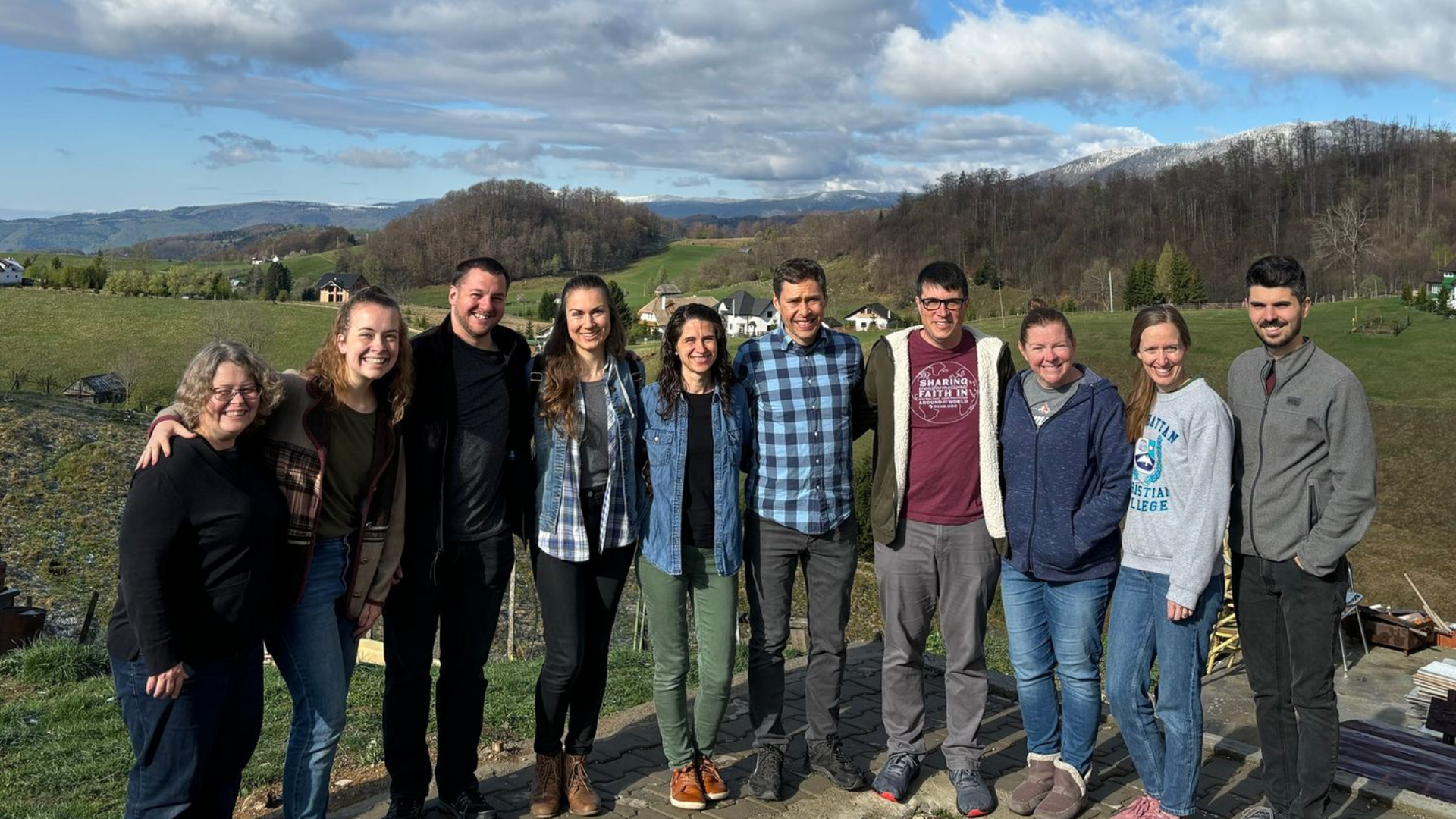
Choosing a Missions Organization: Why SEND International Stands Out “Why should I be a missionary through SEND International?” Jenna, a new missionary in Eastern Europe, shared with us what she appreciates about working with SEND. The highlights for her are: - Devotion to prayer - Diligence in communication - Commitment to development - Intentionality in accountability Prayer “Back in September of 2022, the Lord reconnected me with SEND after I had met them a year prior at the Moody Bible Institute. However, before he would sign me up for anything, my Missions Coach encouraged me to pray. He said something to the effect of, "I know that you've been praying on your own for a long time. But as the Church, we are not called to walk alone. So, you and I won't talk for about a month unless you have questions. I want you to go pray with 5 or 6 others from your church about where God is calling you." That October, more than 10 friends prayed with me and we saw God answer as He directed me to Romania. From February 2024 to November 2025, I had the pleasure of being a part of team meetings in Romania with my SEND colleagues. Our meetings were four hours long, two for prayer and two for business. This has been the minimum for our team. There are also prayer meetings with the local churches we partner with, among smaller groups within our team, of course prayer with many of you across the pond, including those at our US office. The organization was built, has been sustained, and continues to run on prayer. This is my favorite thing about SEND. Communication As I mentioned above, we have a two hour block for business / ministry details in each of our meetings. This provides consistency across our team which works alongside three different churches and in a variety of ministries. It also helps us to communicate about the need for change or growth, alongside what is working well. In addition, my team director also meets with each of us, allowing us to communicate needs, considerations, and prayer requests. I've also enjoyed getting to work with SEND workers outside of my immediate region . We receive emails with the minutes from the Europe leadership team, Friday communications from our international director, and information regarding projects that affect our work among the unreached. In December of 2024, our international director at the time wrote a note to my parents for the first Christmas that I was gone. If nothing else had convinced my mom yet, this did. He took the time to care for me, but also to care well for the parents that were sending me (What it meant to my dad and mom for him to do this well has been one of the greatest ways I've been supported.). I also have some pretty wonderful regional directors. These people have prayed alongside us (while also serving in their own countries of service), they have taken time to come visit and encourage our team, and they have also taken the time to encourage the people in our churches. Development SEND has provided much in the area of development and care (spiritually, physically, mentally, and emotionally). At our regional conference (every three years), there have been medical check ups available, counseling options, and time for connecting with others on the field with similar experience. At our conference last October, I connected with a missionary who served overseas for many years, and is now serving on the administrative side of SEND. She has met with me since then for mentorship and has also invested much of her time recently in preparing a retreat for the singles across Europe. Accountability Over the years I have read and heard amazing stories of how God has worked through missionaries. God has done great things and great things He is still doing! However, people who have committed their lives to the Lord in this way are not “super Christians”. We are still humans with the same struggle against flesh that others have . A major challenge is in being isolated -- living in areas with little to no presence of other believers to sharpen them can cause many difficulties. SEND has been a great resource in this area too. Through my team, I have an accountability partner that I meet with monthly. When my regional director came to visit, he and his wife spent a day with me and asked intentional questions about how I lead, handle conflict, and how I am growing in general as a Christian. In addition, my teammates share their wisdom with me on a regular basis. These things and more have assured me that SEND International is a highly valuable organization and I'm excited to partner with them in service to, for, and with our great God! Interested in being sent by SEND?

Learn about the spiritual harmony in Vietnam & how missionaries engage with college students. Join us in sharing the gospel!

Explore Georgia's spiritual heritage and the impact of SEND International's mission. Join us in fostering authentic relationships today!