
How Missions has Changed Over the Last 30 Years in Japan
When I arrived with my family in Japan in 1993, we first worked with a para-church youth ministry. The ministry almost exclusively happened at Christian locations. Our job as missionaries was to prepare for the program and maintain the facilities. This was gratifying as Christian high school students gathered in rented rooms to encourage one another in their faith walk. We also planned evangelistic events and camps to both encourage believers as well as to proclaim the gospel to the unsaved.
From what we heard and observed, most missionary work was like this—conducting worship services, presenting Christian concerts, hosting banquets with salvation testimonies, and teaching English classes at the church building. These were instrumental in how missionaries did their work in building up the church, starting churches, and spreading the gospel. To get people to attend these events, missionaries urged believers to invite their friends. Also, many missionaries and Japanese pastors went to neighborhood houses to put invitations into all the mailboxes. Occasionally, invitations were handed out in person at train stations or in front of schools.
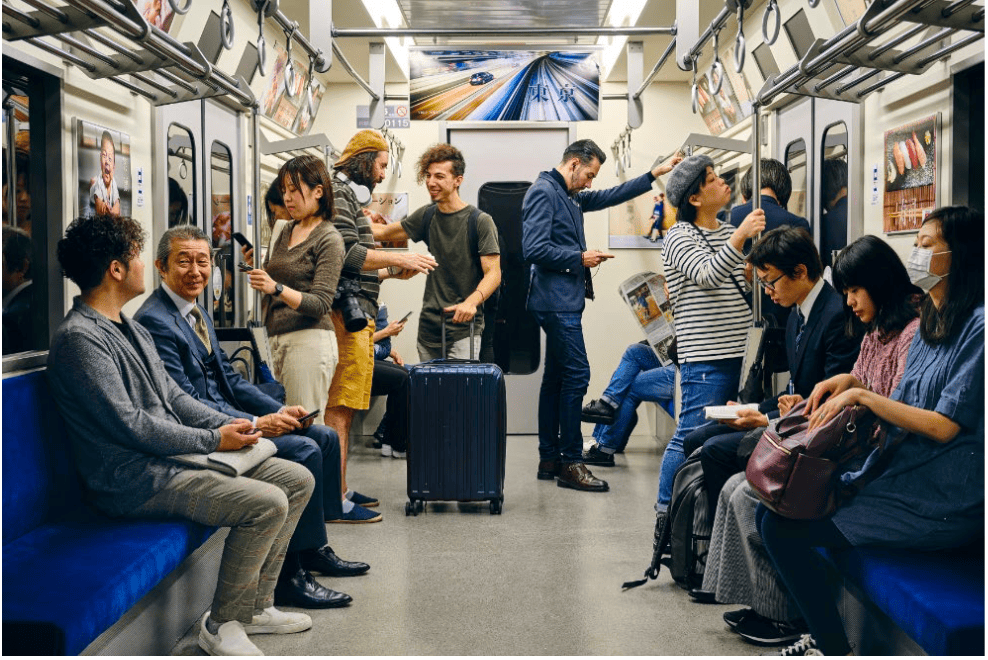
For me personally, I began to see a major shortcoming in relying almost exclusively on this kind of ministry, especially as it pertained to evangelism. It required the unchurched and unsaved, to enter into a Christian environment or go to a Christian location to hear the gospel. I began to pray for courage and opportunities to engage with people outside the Christian places, and God answered those prayers as I met and talked with people on trains, in restaurants, in parks, in stores, etc. I remember one missionary in the early 2000s who was starting a church in eastern Tokyo urged his church members to skip church IF there was an event happening in their community like a festival or a cleaning day. He wanted Christians to be at these gatherings where many unchurched and unsaved people would be.
From inside the Christian circle to outside
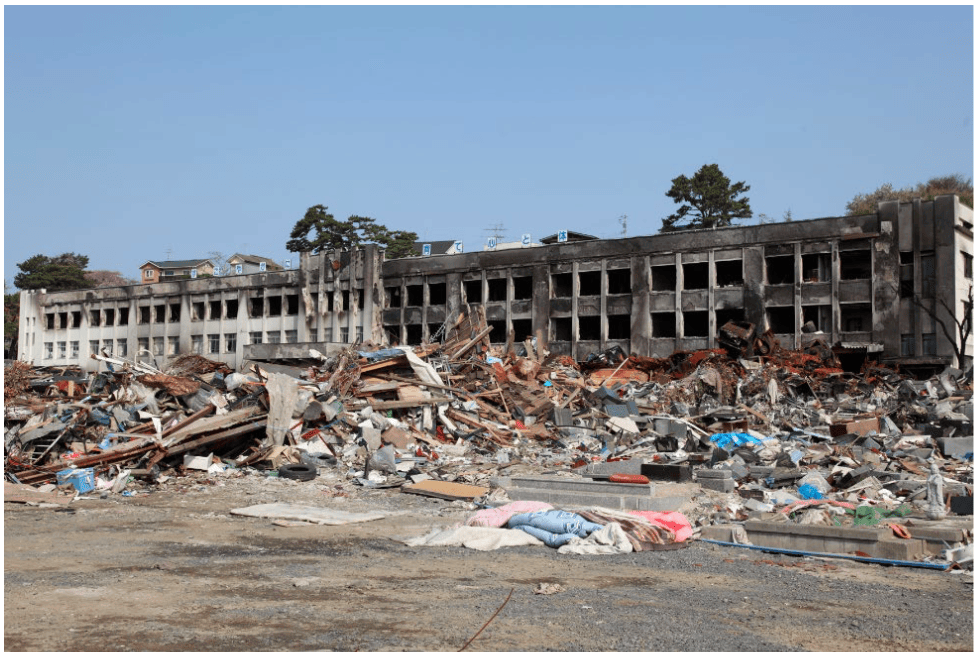
A major shift occurred in 2011 when the triple disaster struck northeastern Japan. Missionaries and even many Japanese Christians went up to the stricken areas of Miyagi, Fukushima, and Iwate. The activities did not take place in Christian places. Missionaries simply showed up to help and serve. In the first days and weeks, it was bringing in supplies like food and blankets. In the following months, it was helping to clean up houses and businesses. Picking up rubble, shoveling out sand and dirt from foundations, and scrubbing walls and floors.
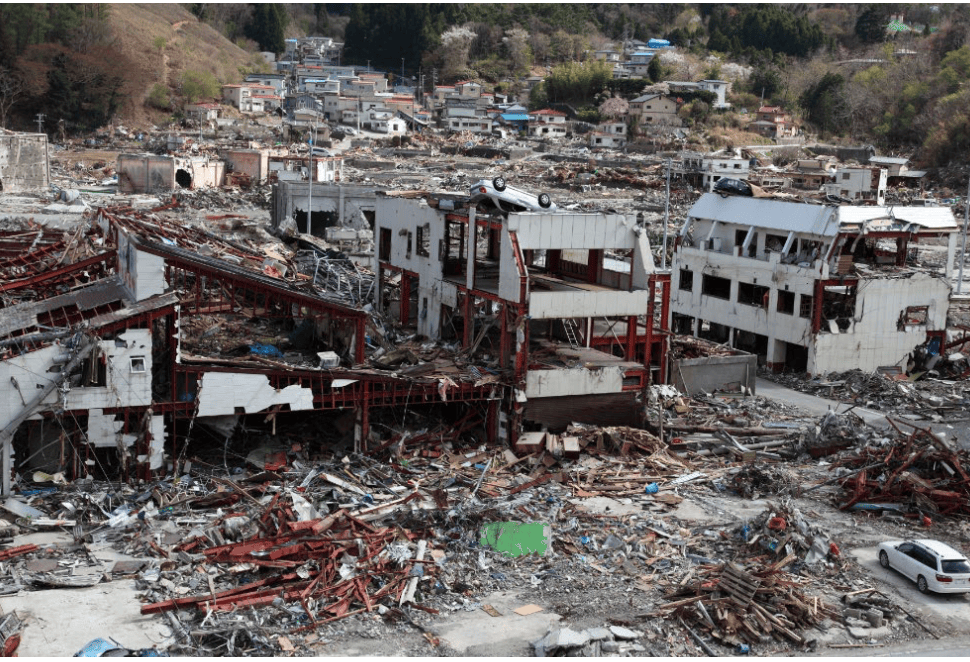
Christians worked alongside non-Christians. Silent prayers would be offered and sometimes groups would pray together before and after a work day. In the following years, missionaries and Japanese believers served in temporary housing areas. They would perform music, lead in some craft, serve a meal, and just sit and listen to disaster victims. The ministry at this point wasn’t much different than before except it was now happening outside a Christian location. Rather than the Christians waiting for people to come to them, they were going out to be among the people.
Meeting them where they are
Perhaps because of this change, I’ve observed more service ministry being done outside of church buildings. I hear of missionaries teaching English at kindergartens and in community centers even though they are not permitted to “proselytize.” Several missionaries visit people in their homes, perhaps bringing them some donated food, but mostly just going to listen to them and when permitted, pray with them. Perhaps it was always there, but I now see and hear more about missionaries getting involved in activities with unbelievers.
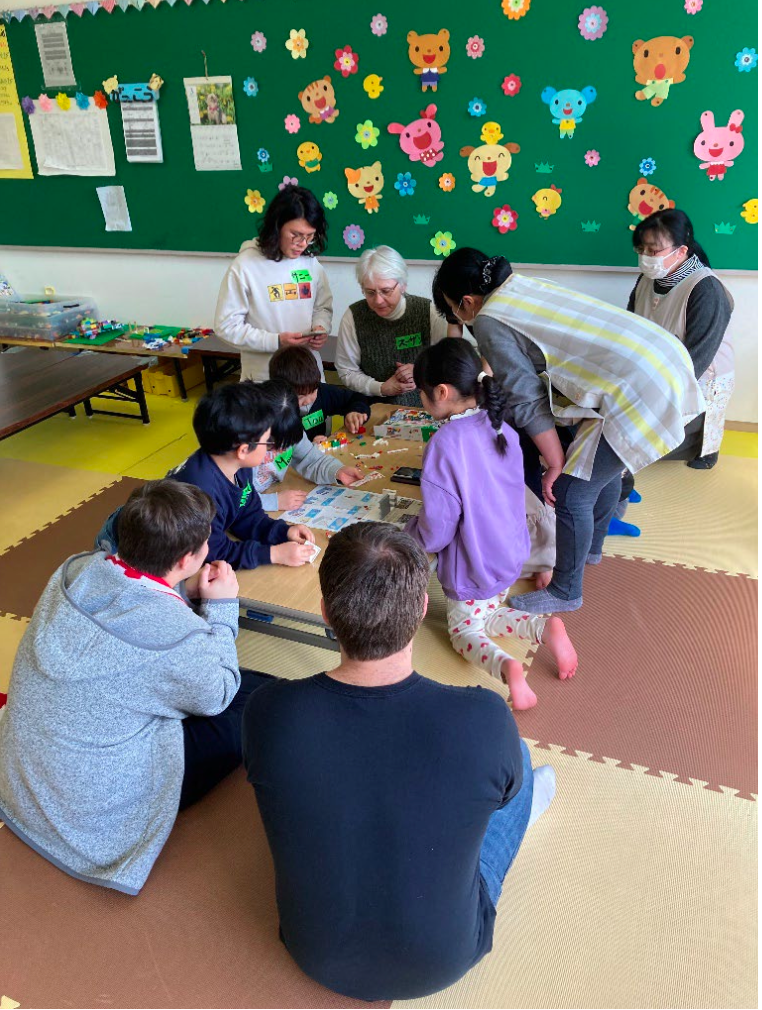
One missionary regularly plays tennis and jogs with unbelievers. Another missionary joined a soccer group and another a volleyball group. My wife and I joined a Japanese sign language group. Another coworker and I have joined a traditional dance group and dance in our local Hanagasa Festival. We get to talk about our faith in one-on-one conversations, not in large groups.
The Japanese pastor with whom we work says this is a harder kind of ministry. It takes longer, but it prevents Christians from being viewed as separate from the community, and even being perceived as important contributors to the community. In an interesting twist, the church we currently cooperate with has allowed their building to be used for community events. A men’s choir practices here; a senior citizens group meets there. Often people in the church are involved in these groups that are by no means Christian in their purposes or activities.
Traditional ministry continues to happen in Christian places like churches and camps, but I think in our three decades here in Japan, we’ve seen a balance of focus on both these places and also on the public places where most Japanese people live their lives. The salt and light of the gospel is being spread out rather than being overly concentrated in a few “Christian” places. Missionaries are valued not only for preaching, but more so for their caring nature, strong relationships, ability to serve, shared interests, and the faith and courage to reach out. As a result, I think we’re seeing a change in younger missionaries who come with a heart for this kind of outreach.
The Japanese pastor with whom we work says this is a harder kind of ministry. It takes longer, but it prevents Christians from being viewed as separate from the community, and even being perceived as important contributors to the community. In an interesting twist, the church we currently cooperate with has allowed their building to be used for community events. A men’s choir practices here; a senior citizens group meets there. Often people in the church are involved in these groups that are by no means Christian in their purposes or activities.
Traditional ministry continues to happen in Christian places like churches and camps, but I think in our three decades here in Japan, we’ve seen a balance of focus on both these places and also on the public places where most Japanese people live their lives. The salt and light of the gospel is being spread out rather than being overly concentrated in a few “Christian” places. Missionaries are valued not only for preaching, but more so for their caring nature, strong relationships, ability to serve, shared interests, and the faith and courage to reach out. As a result, I think we’re seeing a change in younger missionaries who come with a heart for this kind of outreach.
Additional Posts
Choosing a Missions Organization: Why SEND International Stands Out “Why should I be a missionary through SEND International?” Jenna, a new missionary in Eastern Europe, shared with us what she appreciates about working with SEND. The highlights for her are: - Devotion to prayer - Diligence in communication - Commitment to development - Intentionality in accountability Prayer “Back in September of 2022, the Lord reconnected me with SEND after I had met them a year prior at the Moody Bible Institute. However, before he would sign me up for anything, my Missions Coach encouraged me to pray. He said something to the effect of, "I know that you've been praying on your own for a long time. But as the Church, we are not called to walk alone. So, you and I won't talk for about a month unless you have questions. I want you to go pray with 5 or 6 others from your church about where God is calling you." That October, more than 10 friends prayed with me and we saw God answer as He directed me to Romania. From February 2024 to November 2025, I had the pleasure of being a part of team meetings in Romania with my SEND colleagues. Our meetings were four hours long, two for prayer and two for business. This has been the minimum for our team. There are also prayer meetings with the local churches we partner with, among smaller groups within our team, of course prayer with many of you across the pond, including those at our US office. The organization was built, has been sustained, and continues to run on prayer. This is my favorite thing about SEND. Communication As I mentioned above, we have a two hour block for business / ministry details in each of our meetings. This provides consistency across our team which works alongside three different churches and in a variety of ministries. It also helps us to communicate about the need for change or growth, alongside what is working well. In addition, my team director also meets with each of us, allowing us to communicate needs, considerations, and prayer requests. I've also enjoyed getting to work with SEND workers outside of my immediate region . We receive emails with the minutes from the Europe leadership team, Friday communications from our international director, and information regarding projects that affect our work among the unreached. In December of 2024, our international director at the time wrote a note to my parents for the first Christmas that I was gone. If nothing else had convinced my mom yet, this did. He took the time to care for me, but also to care well for the parents that were sending me (What it meant to my dad and mom for him to do this well has been one of the greatest ways I've been supported.). I also have some pretty wonderful regional directors. These people have prayed alongside us (while also serving in their own countries of service), they have taken time to come visit and encourage our team, and they have also taken the time to encourage the people in our churches. Development SEND has provided much in the area of development and care (spiritually, physically, mentally, and emotionally). At our regional conference (every three years), there have been medical check ups available, counseling options, and time for connecting with others on the field with similar experience. At our conference last October, I connected with a missionary who served overseas for many years, and is now serving on the administrative side of SEND. She has met with me since then for mentorship and has also invested much of her time recently in preparing a retreat for the singles across Europe. Accountability Over the years I have read and heard amazing stories of how God has worked through missionaries. God has done great things and great things He is still doing! However, people who have committed their lives to the Lord in this way are not “super Christians”. We are still humans with the same struggle against flesh that others have . A major challenge is in being isolated -- living in areas with little to no presence of other believers to sharpen them can cause many difficulties. SEND has been a great resource in this area too. Through my team, I have an accountability partner that I meet with monthly. When my regional director came to visit, he and his wife spent a day with me and asked intentional questions about how I lead, handle conflict, and how I am growing in general as a Christian. In addition, my teammates share their wisdom with me on a regular basis. These things and more have assured me that SEND International is a highly valuable organization and I'm excited to partner with them in service to, for, and with our great God! Interested in being sent by SEND?

Learn about the spiritual harmony in Vietnam & how missionaries engage with college students. Join us in sharing the gospel!

Explore Georgia's spiritual heritage and the impact of SEND International's mission. Join us in fostering authentic relationships today!