
New mobilization director: We must break through the lie that missions is for super Christians
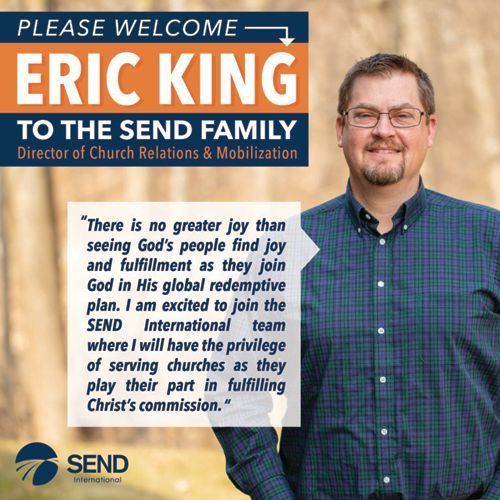
Eric King recently joined SEND International as Director of Church Relations & Mobilization. Eric has served as a missions pastor, a church planter, and in church mobilization and engagement with the International Mission Board. He and his wife, Mariah, have three teen-age children. In this interview, Eric tells the chilling story that God used to draw him into mission, discusses the challenges of recruiting new missionaries, and describes the ideal church/agency relationship.
Q. Your title is Director of Church Relations & Mobilization. Can you describe in layman’s terms what it is you do?
I have the privilege of leading a team that really loves God’s mission and also loves churches and people who are exploring their role in mission. We listen to what God’s doing in the life of a church and look for ways that we can come alongside in partnership. We don’t consider it our role at SEND International to send missionaries ourselves; rather, we assist local churches. We want to equip pastors and church leaders to be comfortable talking about mission in a way that their people can really grasp it and pursue a way to get involved.
Q. Why is it important to link mobilization of new missionaries and church relations?
At SEND, we believe the local church is how God has chosen to fulfill his mission around the world. So philosophically, it’s important for us to come alongside churches to send well. Practically speaking, those missionaries who are sent out well from local churches have a stronger potential of thriving in a new culture.
Q. What does “sending well” look like?
Sending well includes assessing, equipping, caring for missionaries while they’re overseas, and welcoming them back home. The church should know missionary applicants better than we do. Are they spiritually ready? Are they discipled in a way that they can thrive in a new culture? Are they equipped?
Sending well involves giving potential missionaries opportunities to lead and to disciple in their local context, and it’s being a spiritual anchor for on-field missionaries through prayer and support.
Q. What are some of the current challenges in recruiting new missionaries from North America?
I see at least four challenges:
Q. What are some exciting current trends in mission mobilization?
For a long time, we’ve thought of seminary or theologically trained believers going as missionaries. But there’s an emerging idea of missionaries taking alternate pathways. This might mean moving overseas for a job, or entrepreneurially minded believers helping to create jobs in order to open the doors for people to live incarnationally.
Another exciting trend is global mobilization. The West has sent out a lot of pioneer missionaries to places where a foundation for the gospel had not been laid. Now we are seeing many opportunities to focus attention on mobilizing and equipping believers in emerging sending nations. We’re figuring out what it looks like to facilitate others to be pioneering missionaries.
Q. SEND values unity in diversity. How can we send a more diverse missionary workforce from North America?
Internationally, SEND has a visible desire to be diverse in our teaming. When we look at the States, we’ve not done so well. We really want to position ourselves to listen carefully; we want to learn from our non-Anglo brothers and sisters and find ways that we’re creating barriers, structurally or relationally. We want to learn from others who are doing it well.
Q. Why should a church consider partnering with an organization, rather than just sending missionaries out on its own?
Biblically speaking, a church can send missionaries on its own and fulfill Christ’s Commission, but I think there is wisdom in partnering well with organizations that can help do that effectively.
An organization like SEND can provide a lot of assets and resources to help a church send well. We have the experience to help a church assess their members. We also offer training. How do you live and thrive and make disciples in a new culture? The experience of SEND can help a new missionary do that more effectively.
Partnering with an agency means that new missionaries are able to join a team of like-minded believers in places where there are few believers. Having a community helps missionaries thrive.
Working on a team also provides accountability. Considering all that local church leaders have on their plates, it can be hard to also maintain accountability for those who are far away.
Q. What would an ideal church/mission organization relationship look like?
Mutual respect. The organization understands the primary role of the local church in mission, and the local church understands the organization’s experience and the opportunity for the organization to serve them well. Picture a three-legged stool: You’ve got the church, the agency and the sent one working together for the sake of seeing more people come to know Christ, more people discipled, and more churches planted.
Practically speaking, agencies can handle logistics: Support, member care, insurance—all those things that we don’t get so excited about, but are really important.
Q. What drew you into missions?
I grew up with my parents working in inner-city ministry, and I’m very thankful for that heritage, but I didn’t have a lot of exposure to cross-cultural mission from a global perspective. My first out-of-country mission trip was to Brazil when I was in my 20s and working as a small group discipleship guy at my church. I saw that there was some semblance of truth, a little bit of the gospel, but it was mixed in with a lot of spiritism, traditions. People were just really trying to figure out how to get to God.
I stood on top of a mountain where there’s a 90-foot statue of Padre Cicero, a famous priest in that area. Many times, Brazilians will climb to the top of the statue and jump and kill themselves hoping to find favor with God. That’s really sad, that the truth is so liberating and easy, but there are people who don’t know it.
God changed my heart then, and I began to pursue mission in my life and the life of our church. I love Brazil, but God broke my heart for the nations and I began to discover that there are places that have even less access to the truth.
My wife also has a passion for missions. We’ve kept our life ready, so at any given time we could pick up and move overseas, but God’s kept us on the US side, helping others get involved. God’s been faithful to give us cross-cultural opportunities even here.
Q. What do you wish that you had known when you were a missions pastor that you know now, after working with the International Mission Board and now with SEND?
I’ve had so much exposure in the past several years to the many ways that everyday Christians can play a part in missions. I’m seeing opportunities that churches have to lead their people to join in mission that I would never have dreamed of back in the day when I was a mission pastor.
Q. You’ve spent the past six weeks getting to know SEND International. What have you come to appreciate about SEND?
SEND has a desire to be innovative and not stuck in “we’ve always done it that way.”
The people at SEND have genuine care and concern for all the people they have an opportunity to interact with. It’s a very relational organization.
SEND wants to be strategic but always while trying to discern where God’s leading. When a challenging idea comes up, the attitude I hear is, “That’s a hard idea. I’m not really sure I like it, but I definitely want to see if God’s in it, because if God’s in it, I want to do it.”
Let’s close with five quick questions.
1. How do you take your coffee?
It’s based on the quality of the coffee. If it’s really good coffee, I’ll drink it black. At the SEND office, lots of cream.
2. What are you reading?
A series of articles on the household of God. It’s a very intriguing cultural perspective on what the Bible means by house and family.
3. If you had one free day, what would you do?
I would take my sons fishing.
4. Cats or dogs?
Dogs. Are cats really an option?

Additional Posts
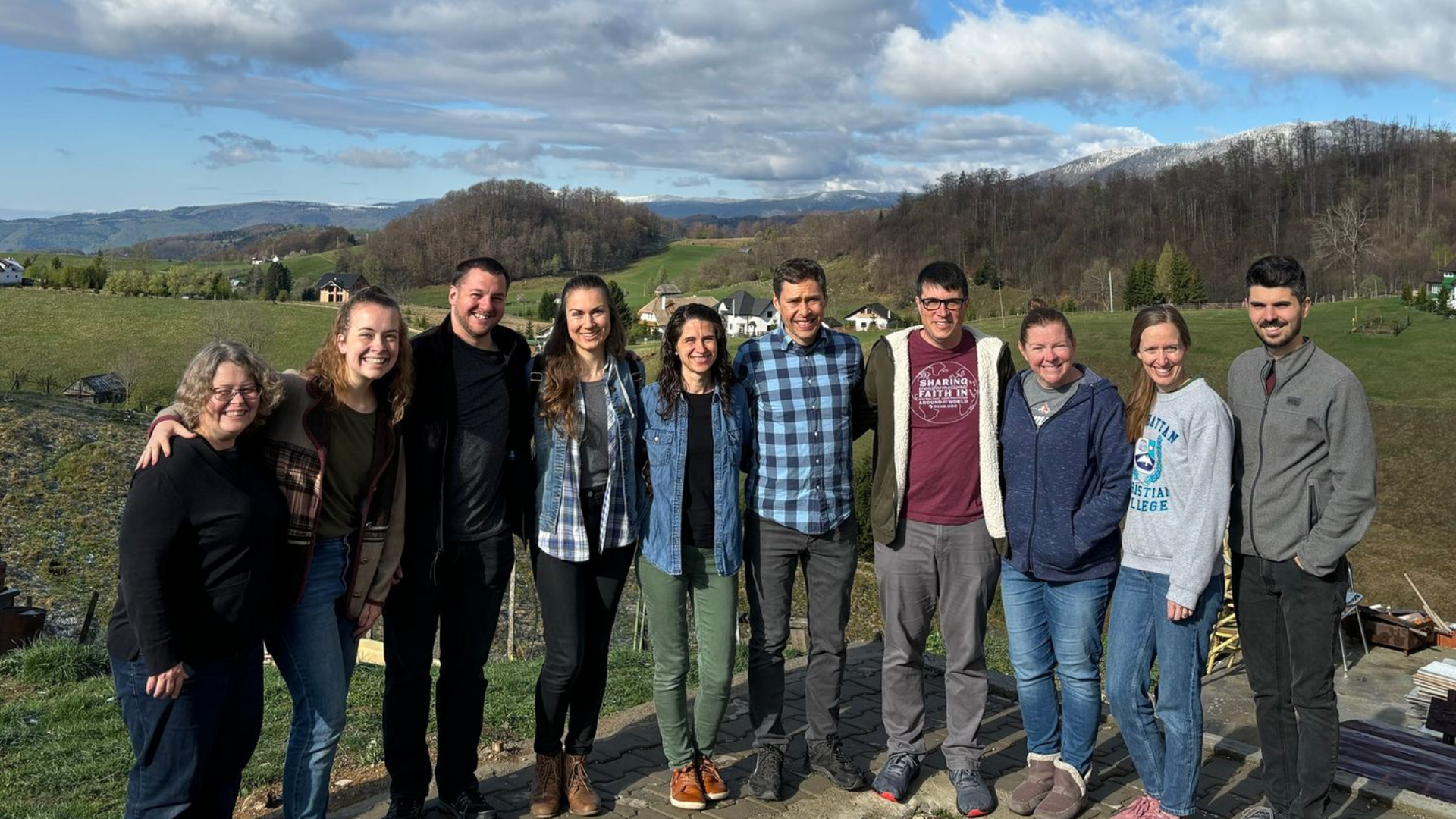
Choosing a Missions Organization: Why SEND International Stands Out “Why should I be a missionary through SEND International?” Jenna, a new missionary in Eastern Europe, shared with us what she appreciates about working with SEND. The highlights for her are: - Devotion to prayer - Diligence in communication - Commitment to development - Intentionality in accountability Prayer “Back in September of 2022, the Lord reconnected me with SEND after I had met them a year prior at the Moody Bible Institute. However, before he would sign me up for anything, my Missions Coach encouraged me to pray. He said something to the effect of, "I know that you've been praying on your own for a long time. But as the Church, we are not called to walk alone. So, you and I won't talk for about a month unless you have questions. I want you to go pray with 5 or 6 others from your church about where God is calling you." That October, more than 10 friends prayed with me and we saw God answer as He directed me to Romania. From February 2024 to November 2025, I had the pleasure of being a part of team meetings in Romania with my SEND colleagues. Our meetings were four hours long, two for prayer and two for business. This has been the minimum for our team. There are also prayer meetings with the local churches we partner with, among smaller groups within our team, of course prayer with many of you across the pond, including those at our US office. The organization was built, has been sustained, and continues to run on prayer. This is my favorite thing about SEND. Communication As I mentioned above, we have a two hour block for business / ministry details in each of our meetings. This provides consistency across our team which works alongside three different churches and in a variety of ministries. It also helps us to communicate about the need for change or growth, alongside what is working well. In addition, my team director also meets with each of us, allowing us to communicate needs, considerations, and prayer requests. I've also enjoyed getting to work with SEND workers outside of my immediate region . We receive emails with the minutes from the Europe leadership team, Friday communications from our international director, and information regarding projects that affect our work among the unreached. In December of 2024, our international director at the time wrote a note to my parents for the first Christmas that I was gone. If nothing else had convinced my mom yet, this did. He took the time to care for me, but also to care well for the parents that were sending me (What it meant to my dad and mom for him to do this well has been one of the greatest ways I've been supported.). I also have some pretty wonderful regional directors. These people have prayed alongside us (while also serving in their own countries of service), they have taken time to come visit and encourage our team, and they have also taken the time to encourage the people in our churches. Development SEND has provided much in the area of development and care (spiritually, physically, mentally, and emotionally). At our regional conference (every three years), there have been medical check ups available, counseling options, and time for connecting with others on the field with similar experience. At our conference last October, I connected with a missionary who served overseas for many years, and is now serving on the administrative side of SEND. She has met with me since then for mentorship and has also invested much of her time recently in preparing a retreat for the singles across Europe. Accountability Over the years I have read and heard amazing stories of how God has worked through missionaries. God has done great things and great things He is still doing! However, people who have committed their lives to the Lord in this way are not “super Christians”. We are still humans with the same struggle against flesh that others have . A major challenge is in being isolated -- living in areas with little to no presence of other believers to sharpen them can cause many difficulties. SEND has been a great resource in this area too. Through my team, I have an accountability partner that I meet with monthly. When my regional director came to visit, he and his wife spent a day with me and asked intentional questions about how I lead, handle conflict, and how I am growing in general as a Christian. In addition, my teammates share their wisdom with me on a regular basis. These things and more have assured me that SEND International is a highly valuable organization and I'm excited to partner with them in service to, for, and with our great God! Interested in being sent by SEND?

Learn about the spiritual harmony in Vietnam & how missionaries engage with college students. Join us in sharing the gospel!

Explore Georgia's spiritual heritage and the impact of SEND International's mission. Join us in fostering authentic relationships today!