Bridging cultural divides to remedy Babel's confusion
By Frank Severn —
Since my appointment as General Director of SEND International in 1980, I have been an advocate of multicultural teams in missions. I came to that view based on my faith/theology and my practical experience. Now that I have been retired for many years, I still strongly believe that multicultural teams reflect the wonder of the gospel of grace and picture the glorious future awaiting all believers when we worship Christ together in heaven in the completed Body of Christ, made up of believers from all generations and from every tribe, tongue, people, and nation.
Let’s look at theology first. The metanarrative of the Bible is that God created mankind in his image. Although that image was marred by our sin — which started with Adam and Eve’s clear disobedience and banishment from the Garden of Eden, and continues in every human being — we still retain the image of our Creator. God has a plan to restore mankind to fellowship with him for eternity. That plan was foreshadowed in the Old Testament and fully revealed in his Son, Jesus Christ, who took on flesh and went to the cross to pay for our sin and reconcile believers to God. In so doing, we become sons and daughters of the living God and begin to manifest the image of God in greater degree through the ministry of the Holy Spirit.
All believers in our Lord Jesus Christ become members of his Body called the Church. As such, we are all brothers and sisters in Christ. We all have been given the Holy Spirit to dwell in us. We have unity together based not on ethnic or social groupings but on our common faith in our Lord Jesus. Often that unity is hard to realize because of language, culture, and history. It is only the metanarrative of the Bible that enables us to bridge these differences.
In practice, these differences tend to divide us. They push us into staying close to our own language, history, and culture, and they cause us to be suspicious of other languages, cultures, and people.
Lessons learned on the field
During my missionary experience in the Philippines, I learned many valuable lessons. The first was that Filipino culture, while different, and influenced by sin as are all cultures, had wonderful aspects that were missing in my culture. I also appreciated the glorious fact that Filipino believers had the same Holy Spirit as I did. I came to love them as brothers and sisters and co-workers in the Kingdom of God. I valued their gifts and perspectives. They are under the same Great Commission as I am. It was obvious to me that Filipinos would and should become missionaries to other peoples and cultures. In fact, they should become members of our mission — and now, many have.
The second great lesson I learned is that when we listen to each other and work to bridge our linguistic and cultural backgrounds and biases, we find a rich display of God’s image in our brothers and sisters. This was impressed on me as I worked with some of our German and Australian colleagues. There were many cultural things that tended to confuse or separate us, but when we listened to each other and appreciated the history experienced by each one, it was a joy to be co-workers in the Kingdom.
I deeply valued my friendships with my German, Australian and Asian colleagues. I also learned much from them. Their cultural backgrounds brought good perspectives and gifts to our teams that I did not have. Working together helped us to better manifest the multifaceted Body of Christ.
God’s ‘reversal of Babel’
The concept of multiculturalism has some negative aspects, especially when it is used in public discourse and philosophical discussions. In post-modern academic thought, it means that fragmentationism is how we view the world. Jeffrey Stout
characterized this cultural situation as one for which the biblical image of Babel — a story of division and separation — serves in a figurative sense. There is not a unified story or commonality. Rather each people or tribe or even group develops its own ethic and “truth.” This fragmentation rules the day. Every person has a right to be who they are and cannot be judged by someone else. There is no metanarrative that brings us together.
“The culture of Babel takes the confusion of tongues for granted; it sees no clear alternative to the acceptance of irreducible diversity. In such an understanding of our cultural condition, the Christian metanarrative can only be viewed as scandalous. But the Scriptures present a remedy for Babel’s confusion. Pentecost was God’s reversal of Babel.
”
Babel is a picture of what God did because of human pride and sin. It represents one kind of multiculturalism. Mouw says it is an example of “irreducible diversity, of the loss of common patterns of understanding.” It brings divisions and erects fences.
Pentecost is a picture of another type of multiculturalism. It does not remove diversity of languages, but it provides us with power and life, which enables us to see our commonality and to see people as made in the image of God. It unites diverse peoples in a common faith and a common metanarrative. Pentecost brings reconciliation, healing, unity, and a new understanding.
Showing now what we shall be for eternity
For many years I have sensed that God has gifted, not only individual Christians with special gifts to bless and build up their churches, but he has also gifted the church within its culture with special gifts that should bless the whole Church in all its diversity.
The following quote from Mouw illustrates what I have long sensed:
The death, resurrection, and ascension of our Lord Jesus gives us an alternative to the fragmentation of Babel. Jesus promised that he would send His Spirit to empower the church to witness across barriers and to unite believers in a common bond that breaks down walls and unites us as sinners saved by grace. We are members of one family! Pentecost brings a new era of redemptive history that fulfills the Abrahamic Covenant. All nations of the earth will be blessed and will be a blessing.
When we work together in multicultural teams, we begin to demonstrate what we shall be in glory. We show how the Spirit breaks down walls and enables us to learn from one another as we proclaim the gospel, which is universal in its appeal and application. We also begin to show more of the imago Dei to a watching world. Multicultural teams demonstrate that our God is not the unique god of any culture. Our God is the eternal creator of all peoples. Our gospel is not a Western invention, it is the plan of the Creator God to redeem and unite his people from every tribe, people, language, and nation!
• Our total commitment to Jesus Christ fuels all that we do.
Read SEND’s statement of faith.
• Learn about SEND International's mission, focus, and values .
• Learn about SEND International's mission, focus, and values .
Additional Posts
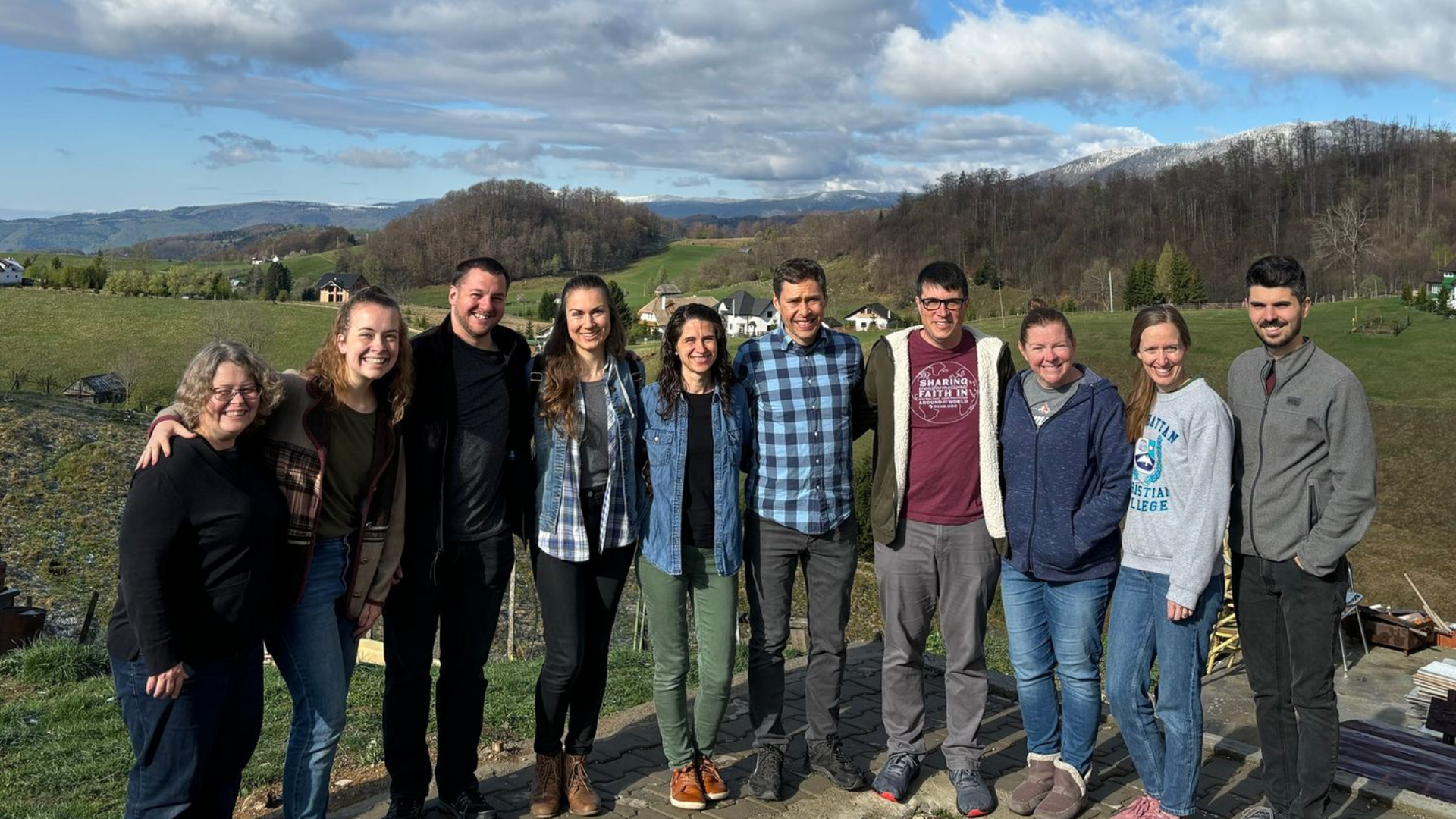
Choosing a Missions Organization: Why SEND International Stands Out “Why should I be a missionary through SEND International?” Jenna, a new missionary in Eastern Europe, shared with us what she appreciates about working with SEND. The highlights for her are: - Devotion to prayer - Diligence in communication - Commitment to development - Intentionality in accountability Prayer “Back in September of 2022, the Lord reconnected me with SEND after I had met them a year prior at the Moody Bible Institute. However, before he would sign me up for anything, my Missions Coach encouraged me to pray. He said something to the effect of, "I know that you've been praying on your own for a long time. But as the Church, we are not called to walk alone. So, you and I won't talk for about a month unless you have questions. I want you to go pray with 5 or 6 others from your church about where God is calling you." That October, more than 10 friends prayed with me and we saw God answer as He directed me to Romania. From February 2024 to November 2025, I had the pleasure of being a part of team meetings in Romania with my SEND colleagues. Our meetings were four hours long, two for prayer and two for business. This has been the minimum for our team. There are also prayer meetings with the local churches we partner with, among smaller groups within our team, of course prayer with many of you across the pond, including those at our US office. The organization was built, has been sustained, and continues to run on prayer. This is my favorite thing about SEND. Communication As I mentioned above, we have a two hour block for business / ministry details in each of our meetings. This provides consistency across our team which works alongside three different churches and in a variety of ministries. It also helps us to communicate about the need for change or growth, alongside what is working well. In addition, my team director also meets with each of us, allowing us to communicate needs, considerations, and prayer requests. I've also enjoyed getting to work with SEND workers outside of my immediate region . We receive emails with the minutes from the Europe leadership team, Friday communications from our international director, and information regarding projects that affect our work among the unreached. In December of 2024, our international director at the time wrote a note to my parents for the first Christmas that I was gone. If nothing else had convinced my mom yet, this did. He took the time to care for me, but also to care well for the parents that were sending me (What it meant to my dad and mom for him to do this well has been one of the greatest ways I've been supported.). I also have some pretty wonderful regional directors. These people have prayed alongside us (while also serving in their own countries of service), they have taken time to come visit and encourage our team, and they have also taken the time to encourage the people in our churches. Development SEND has provided much in the area of development and care (spiritually, physically, mentally, and emotionally). At our regional conference (every three years), there have been medical check ups available, counseling options, and time for connecting with others on the field with similar experience. At our conference last October, I connected with a missionary who served overseas for many years, and is now serving on the administrative side of SEND. She has met with me since then for mentorship and has also invested much of her time recently in preparing a retreat for the singles across Europe. Accountability Over the years I have read and heard amazing stories of how God has worked through missionaries. God has done great things and great things He is still doing! However, people who have committed their lives to the Lord in this way are not “super Christians”. We are still humans with the same struggle against flesh that others have . A major challenge is in being isolated -- living in areas with little to no presence of other believers to sharpen them can cause many difficulties. SEND has been a great resource in this area too. Through my team, I have an accountability partner that I meet with monthly. When my regional director came to visit, he and his wife spent a day with me and asked intentional questions about how I lead, handle conflict, and how I am growing in general as a Christian. In addition, my teammates share their wisdom with me on a regular basis. These things and more have assured me that SEND International is a highly valuable organization and I'm excited to partner with them in service to, for, and with our great God! Interested in being sent by SEND?

Learn about the spiritual harmony in Vietnam & how missionaries engage with college students. Join us in sharing the gospel!

Explore Georgia's spiritual heritage and the impact of SEND International's mission. Join us in fostering authentic relationships today!